How to Support Families of Children with Mental Health Issues
Publications
By Paul R. Pace
Research shows siblings of children with mental health issues are at risk of developing maladaptive behaviors themselves, says Emily Rubin, LICSW.
“I began to look at sibling literature,” Rubin said. Though studies of the impact of mental illness on siblings were scant, there were several important findings, she said. They are:
- Family support has been positively correlated with improved outcomes for children with mental health needs.
- Repeated exposure to traumatic events can lead to anxiety and depression.
- Siblings, particularly those who are female-identified (sisters), tend to become adult caregivers for brothers and sisters with disabilities.
“These were compelling points to me, and I decided to create a program for families of children with mental health issues,” said Rubin, director of Sibling Support at the Eunice Kennedy Shriver Center and an assistant professor of psychiatry at the University of Massachusetts Medical School. The goals are to build resiliency and minimize trauma among siblings, increase competency and confidence among caregivers, and build capacity among clinicians who practice family-centered mental health care, Rubin said.
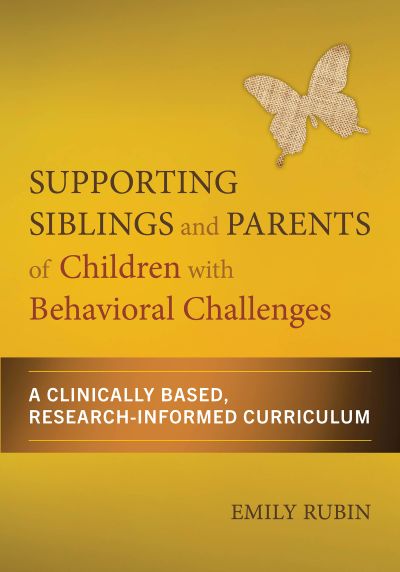
Her new NASW Press book, “Supporting Siblings and Parents of Children with Behavioral Challenges: A Clinically Based, Research-Informed Curriculum,” points out it is important to involve parents/caregivers in efforts to support school-age siblings, especially when there are safety concerns.
This approach is different from traditional sibling support groups, where caregivers drop off the sibling and are not part of the intervention.