Loneliness and Isolation
Physical and Mental Health Could be at Risk
By Jaimie Seaton
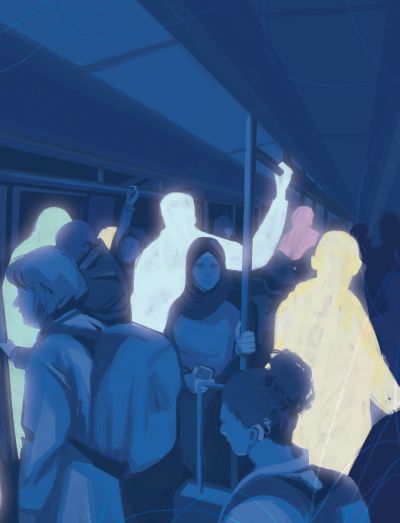
In May 2023, social isolation and loneliness were declared an epidemic. The declaration, made in a report from the U.S. surgeon general at the time, Dr. Vivek Murthy, was accompanied by the startling finding that a lack of social connection can increase the risk for premature death by the same amount as smoking up to 15 cigarettes a day.
It would be logical to attribute the findings in the report to the COVID-19 pandemic, which officially began in the U.S. in March 2020, prompting stay-at-home orders across the country. With millions of Americans working remotely, attending school virtually and limiting nonessential movement outside the house, it’s little wonder that the country collectively would have been experiencing cabin fever by 2023.
But the data in the 2023 report actually came from a study published in 2010.
The fact is, Americans were socially isolated and lonely long before COVID; the pandemic simply made people more physically isolated. But physical isolation is just one part of the equation. And here’s something else to consider: Not all physically isolated people are lonely; some are happy in their isolation. Likewise, not all lonely people are physically isolated.
As Murthy warned, there are serious personal health effects of loneliness and unwanted isolation. There also are harmful societal effects, including devastating violence. The turbulence of the past few years and deep polarization of the country has further exacerbated the problem — but it is not intractable.
Policymakers, individuals, community organizations, schools and social workers all have an important part to play in reducing harm to the people experiencing loneliness and isolation. And experts agree that loneliness and isolation are societal problems that cannot be ignored.
Loneliness Can’t Be Cured With More Social Media Clicks
Anyone who has ever felt lonely in the middle of a crowded party understands that loneliness isn’t necessarily connected to the number of people in your life. Similarly, if it were possible to see every person on the planet who was physically alone, you couldn’t tell how many of them were lonely.
“Social isolation is a form of being alone; you can count the number of social contacts you have. Being lonely is completely subjective. It’s how you feel about the world around you and your relationship to it from a social perspective,” says Jeremy Nobel, MD, MPH, a longtime faculty member of Harvard Medical School, the Harvard T.H. Chan School of Public Health, where he teaches a highly sought-after course on loneliness.
“That makes loneliness harder to measure, harder to get people to talk about or understand, harder for social workers or anybody else on the front lines to recognize. Social isolation is easier. You can just ask people, ‘How many other people do you see in a typical day or week?’ and they’ll tell you. But if you ask them if they’re lonely, they often feel embarrassed and ashamed. So, they minimize it,” says Nobel, who also is the author of “Project UnLonely: Healing Our Crisis of Disconnection.” However, according to Noble, we are making progress as a society in that regard, and younger people are more willing to talk about their loneliness. “Sometimes I compare the stigma around loneliness and talking about it to where depression was 25 years ago,” he said.
Antoinette Shine, LCSW, who works with families and individuals in NYC, is seeing a similar pattern. “For some, loneliness is an entirely new experience, and for others it’s not new but is manifesting in new ways.” She also notes that over the past five years, “more men are coming in — not because they are necessarily more lonely, but because seeking help has become more normalized.”
Not all loneliness is the same, Nobel says. There are three main types: Psychological loneliness is feeling a lack of quality connection to others. Shine notes that her millennial clients in particular struggle with psychological loneliness.
The second type of loneliness is spiritual: the feeling you just don’t fit in or belong to the bigger narrative of human experience. With uncertainty about the world due to geopolitical distress and climate anxiety, people of all ages can worry about their lives having purpose and meaning, but it’s particularly acute among Gen Z, Nobel says.
The third type is systemic or societal exclusion: being excluded due to race or gender. This type can be situational, so you can have plenty of friends but feel isolated in a racist or sexist workplace, for example.
Causes of Social Isolation
Systemic exclusion is a type of social isolation where an individual can be isolated from and rejected by a group. There are a variety of reasons why people experience this dynamic. For example, people in abusive relationships may be isolated from family and friends by their abuser or isolate themselves to keep the abuse private. Or, those who are unemployed or experiencing severe financial problems may choose isolation out of shame.
Then there’s social isolation due to cultural shifts. Social engagement has been on the decline for decades. We’re not joining clubs, religious institutions or community organizations at the rate of previous generations, nor are we connecting with people in person as much. In fact, Colleen Galambos, PhD, LCSW, ACSW, FGSA, FAASWSW, who is a professor and Helen Bader Endowed Chair in Applied Gerontology at the University of Wisconsin-Milwaukee, believes we are moving even further away from building community together.
Social isolation also can come from a change in environment, such as moving, retirement or the death of a loved one. “The older you get, the more that compounded grief is there. You lose a lot of the people that you depend on for your social support,” Galambos says.
Not surprisingly, those who have physical ailments or disabilities and limited mobility may be isolated as well. Again, social isolation doesn’t necessarily equate to loneliness, but it may. Sandra Edmonds Crewe, PhD, MSW, professor of social work at Howard University, says mental health issues, particularly trauma, also can lead to social isolation and loneliness—and she includes the twin pandemics of COVID and racism as trauma.
Chris McLaughlin, MSW, LCSW, who works with teens and families in Maine, says some of the young people he works with feel rejected, which is a significant factor in determining their connection to others. This is particularly acute with teens who identify as LGBTQ+, have autism spectrum disorder or other diagnoses, and who are more likely to be bullied and rejected by their peers.
The current political environment, polarization and othering of numerous groups has been extremely isolating for the LGBTQ+ community and marginalized communities. “Most notably, for trans and gender expansive young adults, the open hostility and vitriol aimed at that community … is having a huge impact on a feeling of safety and a feeling of belonging,” says Peter Karys, LCSW, CPP, CASAC, the director of youth services at The Lesbian, Gay, Bisexual & Transgender Community Center in New York City.
He adds that young adults have a lot more fear regarding who it is safe to talk with about coming to terms with their identity or to come out to, which adds to their sense of isolation and loneliness.
Social Media: The Good and the Bad

Much has been made of social media’s contribution to the epidemic of loneliness and isolation. Social media can be harmful in that it provides ample opportunities for comparison to others who post curated versions of seemingly perfect lives. Those who rely too much on social media for connection may do so at the expense of face-to-face encounters, thus substituting superficial relationships based on likes for meaningful friendships based on shared experiences and trust.
Moreover, Nobel says that when people increase digital communication, synchronous communication (a real-time, live exchange between people, such as a phone call) becomes increasingly uncommon. Eventually, speaking with someone live or in person can become anxiety-producing, creating a vicious cycle.
But social media also can be a lifeline. “I can think of several young people who, without their online peer group, would have no one to connect with. So from a harm reduction perspective, there’s part of me that wonders about not pulling that safety net. It’s not an all-or-nothing proposition,” McLaughlin says.
People of all ages are increasingly turning to social media for mental health support, and Crewe, who was a co-lead on the report Grand Challenge: Eradicate Social Isolation, published before the pandemic, says parents and social workers need to be paying attention. “Online interventions are great,” Crewe says, “but they have to be monitored within the context of the profession to make sure confident and qualified people are delivering this information. To me, one of the major issues and responsibilities of social workers is to make sure we’re paying attention to our children.”
Physical and Mental Health Effects
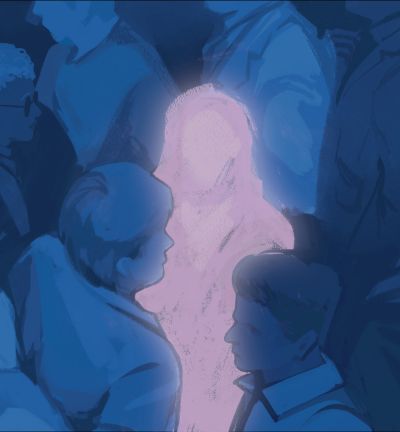
In 2022, the American Heart Association released a report linking social isolation and loneliness with a 29% increase in risk for heart attack and/or death from heart disease and a 32% increase in risk for stroke. Further, the report, which reviewed four decades of research, found that those who were socially isolated were more likely to experience depression and vice versa.
Numerous studies have linked loneliness and isolation with ill health effects such as inflammation, lower immune responses, Type 2 diabetes and early death. Those who feel lonely and isolated also are less likely to take care of their health and more likely to have disordered eating and obesity, and use substances like alcohol and illicit drugs.
They are more likely to experience anxiety, cognitive decline and insomnia as well. Nobel explains that if someone has a significantly painful experience or trauma, they tend to back away from the world because they don’t want to be hurt again. As they back away, they start seeing the world as more threatening, and they’re at risk of spiraling.
“People have to know that other people’s loneliness can be dangerous to their health, too,” Nobel says, referring to research linking social isolation and mass shootings. One 2023 study (from the journal Psychology of Violence) of the psychological crises exhibited by 177 mass shooters found social isolation to be the most important external indicator leading up to the attacks.
Clearly, not all socially isolated people become mass shooters. However, a 2025 study proposed that social isolation can exacerbate symptoms of psychiatric disorders and, if coping mechanisms don’t work, a path to violence is more likely.
Regarding trying to prevent mass shootings, Crewe says that in these heightened politically violent times, it’s not enough to support young people who may feel ostracized and alone. “We target the child. But maybe we need to spend a little more time talking to the parents of children who are disengaged.”
There also is a profound link between loneliness, social isolation and suicide. One 2024 study, from the Journal of Affective Disorders, found that loneliness and social isolation are associated with an approximately five-fold increase in risk of mortality from suicide. Crewe is particularly concerned about the issue and its rise among the Black population, especially among young Black men. The suicide death rate among Black youth has increased faster than any other racial/ethnic group. From 2007 to 2020, the suicide rate rose 144% among 10- to 17-year-olds who are Black.
Challenges to Addressing the Problem
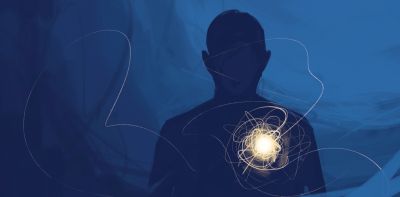
Challenges in identifying loneliness and/or isolation in individuals make it hard to offer solutions. One is the blurred line between isolation or loneliness because, as Galambos notes, the interventions will be different.
To this end, she says it’s vital to do a thorough assessment of the person. “[Determine what the issue is] that’s preventing people from connecting socially and then com[e] up with the right intervention. We want to plug people into things that make sense for them and the social problem that they are encountering,” Galambos says.
One reason the National Academies’ Consensus report focused on the health care system is because it may be the only connection to the outside world for some, she says. If they’re living alone at home without access to technology, being seen in a health care setting may present the only opportunity they have to be connected with the right resources.
The National Academies’ report focused on older adults, but Crewe says a proper assessment of the individual as well as their situation and surroundings is crucially important with children as well. Sometimes generic approaches are used for complex situations. For example, a child may be socially isolated and there may be domestic violence in the home.
“The approach then has to really focus on addressing the violence before we start saying ‘get out there be a part of the group,’” Crewe says.
Support for Lonely Individuals
Within the context of learning as much as possible about the root causes of loneliness and isolation from clients, our experts offer a number of resources and suggestions.
Organizations, including NASW, AARP, local Aging and Disability Resource Centers (ADRCs) and the National Council on Aging have resources for professionals and older adults on addressing loneliness and isolation. Public libraries, recreational facilities and community organizations often have social programs geared toward different age groups. These can be a good resource for social workers who want to connect clients with activities.
Shine reminds her clients that loneliness is a normal and common experience and not necessarily permanent. She helps her clients identify black-and-white thinking or polarizing language when describing social interactions and suggests more neutral language. Shine also spends a lot of time tapping into their values so they can seek out meaningful relationships that align. And she encourages them to set goals and outline steps along the way.
With teens, including LGBTQ+ teens, Karys says it’s important to create safe spaces, almost as a preemptive measure, because an individual who feels lonely or is being socially isolated may not be ready to talk about it or ask for help. (For example, having a pride flag on a desk at school.) He also emphasizes meeting teens where they are and giving them options. “We all have different needs and different ways of getting support,” Karys says. The Trevor Project provides counseling and support to LBGTQ+ youth free and confidentially 24/7.
Crewe says social workers should be aware of the signs and symptoms of suicide and offer resources, such as 988 Lifeline, which also offers free and confidential support 24/7. Nobel says social workers are on the front lines and can engage people. “They’re in a great position to educate and inform people about loneliness and normalize it as a human experience, destigmatize it, and take the shame and guilt out of it.” He adds that, in building trust-based relationships, social workers are also in a good position to guide clients toward activities they have a genuine interest in, such as walking or gardening.
As the founder of The Foundation for Art & Healing, whose signature initiative is Project UnLonely, Nobel believes creative expression is the key to “give people the sense of inspiration, empowerment, engagement and then ultimately connection.” To that end, he encourages social workers to guide people to local arts-based resources, and to use Project UnLonely which has free, downloadable resource materials.
A recent curated article in Monitor on Psychology cited research that found an interest in the arts engages the brain region associated with introspection, may promote empathy and social connection, and can provide other mental health benefits.
Without diminishing the pain felt by people who are lonely or socially isolated, it’s worth remembering that, just as being connected is a human need, so too is having time to reflect.
“Solitude, the state of being alone but in touch with thoughts and feelings is a very important state for health and well-being,” Nobel says. “The arts can actually accompany solitude so that, as you’re on your own, you can think about the elements of the world around you that you find beautiful and inspiring and meaningful.”
Jaimie Seaton is a New England-based journalist with 30 years of experience. Her work appears in multiple publications, including Scientific American and Smithsonian Magazine.
Resources