Social Work Licensure Compact Expected to be Active in 2026
By Paul R. Pace
The Social Work Licensure Compact, designed to improve licensure mobility and allow social workers to practice lawfully across participating states, is moving through its regulatory phase and may be active later this year.
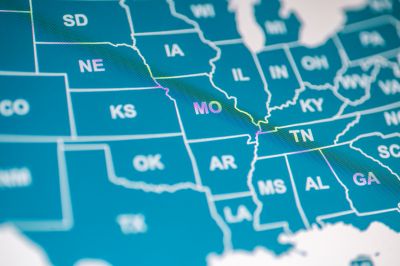
The interstate agreement will enable qualified social workers to serve clients in every state that joins the compact, rather than going through the licensure process in each state where they want to practice.
NASW, the Association of Social Work Boards, and the Clinical Social Work Association have been collaborating as core partners in the development of the compact. At press time, the compact had passed in 30 states, said Karen Goodenough, PhD, MSW, LGSW, executive director of the NASW Minnesota and North Dakota chapters. States not currently under the compact can still pass bills to join the multistate agreement.
Goodenough, who also is the Licensure Task Force chair for NASW and serves as the association’s representative on the Interstate Compact Commission, said social workers may be able to apply for the compact by this fall.
The compact will offer a professional license obtained in a social worker’s home state, and it grants them the privilege to practice in all other compact states, Goodenough said.
Unlike other professional compacts, the Social Work Licensure Compact requires only one application for access to all participating states.
The Social Work Licensure Compact Commission has one representative from each state that has passed the compact. This person is usually someone from the state licensing board regulatory authority, Goodenough said. The commission also has nonvoting representatives from several social work associations, one of which is NASW.
The commission notes there are approximately 500,000 licensed social workers in the United States. Despite the high demand for social work services, licensees are limited to providing services within state borders. The compact seeks to increase public access to social work services, provide licensees with opportunities for multistate practice, support relocating military families, enhance public protection abilities, and allow for expanded use of telehealth technologies.
According to swcompact.org, the compact commission is acquiring a data system, a foundational piece of compact operations, where member states will communicate licensure information with each other and with the compact commission. Once the data system is fully developed, states will be onboarded to the new system. It is expected that states will have varying timelines to onboard and will be largely dependent on the state’s current licensure infrastructure.
The commission also will hire staff, select a secretariat organization, and take additional steps for the compact to move toward being fully operational. Once the data system is functional in states and the commission has finalized all necessary rulemaking, applications will be made available for social workers to apply for a multistate license, the compact website says. After a home state confirms eligibility, all fees are paid, and a social worker is granted a multistate license, they will be able to practice in all other member states of the compact without taking any further steps.
The benefits for licensees include:
- Ease of mobility
- Expands employment opportunities into new markets
- Allows for continuity of care for clients who are moving to a new jurisdiction or who frequently relocate
- Leverages technological innovations like telehealth
- Supports relocating military spouses and families.
The benefits for licensing authorities include:
- Creates a shared data system, which reduces administrative burdens; and provides rapid access to information on licensees, investigations and discipline
- Reduces application processing time
- Expands cooperation among member states on investigations and disputes
- Enhances public safety.
The benefits for states are:
- Having a tool for addressing workforce shortages and strengthening labor markets
- Expands consumer access to highly qualified social workers
- Preserves state sovereignty.
For more information, visit swcompact.org and socialworkers.org/advocacy/interstate-licensure-compact-for-social-work.